Wildlife Detection Platform
Developing a modular wildlife monitoring platform consisting of low-power Scout camera nodes, Ranger field stations, and future AI Hub infrastructure for autonomous wildlife observation and edge AI research.
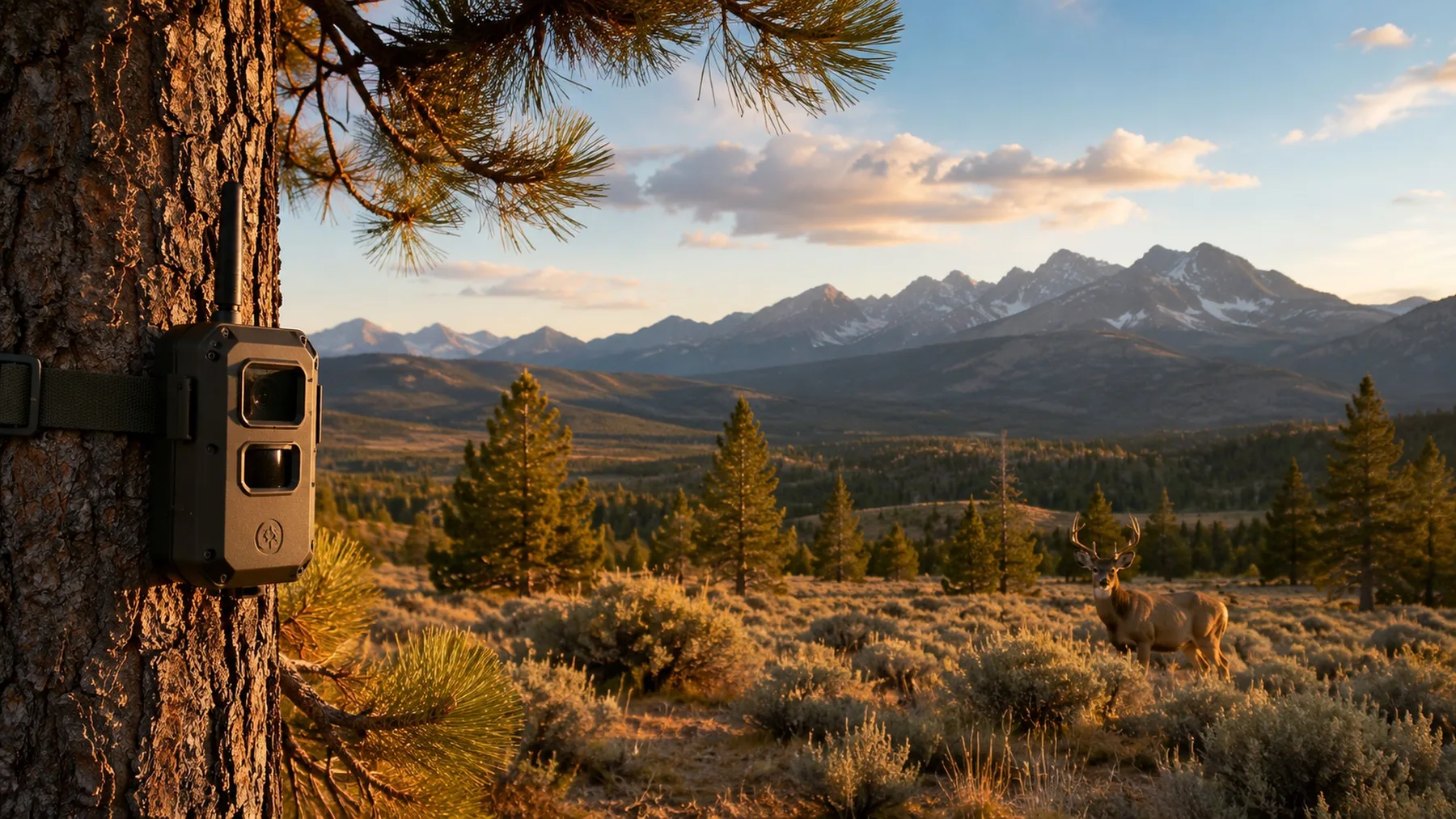
WLD-HERO-01 — Wildlife Platform Hero
Concept designConcept visualization of the Wildlife Detection Platform in a Central Oregon high-desert deployment, with a Scout field node monitoring wildlife activity.
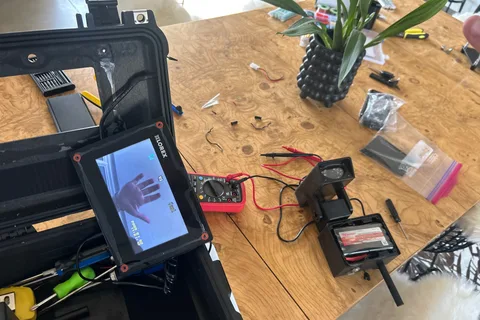
A chance opportunity to salvage several discontinued wireless camera systems became the starting point for this project. What began as an attempt to understand and reuse aging hardware turned into a bigger question: what would I build differently if I designed the system myself?
I wanted to design an open, modular platform built around low-cost embedded hardware, edge intelligence, and serviceable enclosures.
System Architecture
Rather than forcing a single device to do everything, the platform is divided into three distinct roles:
- Scout: An inexpensive, low-power sensor node deployed in the field. It stays asleep until motion triggers it, captures an image, and logs or transmits the event.
- Ranger: A planned field station (such as a single-board computer) that manages multiple Scouts over local wireless, filters false triggers, and coordinates data.
- AI Hub: An optional future system for long-term data management, image review, and species classification.
Scout Alpha 1: Current Focus
Current work is focused on bringing up the first prototype node: Scout Alpha 1.
Rather than designing around hypothetical components, I purchased the hardware first so the mechanical enclosure could be based on real measurements:
- Controller: Waveshare ESP32-S3 AIoT Camera Board. The ESP32-S3 provides the processing power needed for image capture while supporting deep-sleep operation with microamp-level standby current.
- Camera: Omnivision OV5640 module, chosen for a practical balance between image detail, physical size, and hardware compatibility.
- Motion Wake: A passive infrared (PIR) sensor that triggers an external wake interrupt, keeping the system asleep until movement is detected.
- Enclosure: Custom 3D-printed weather-resistant PETG housing with captive stainless fasteners and a serviceable battery bay.
Current Status vs Planned Work
The initial hardware selection and mechanical envelope are established on the bench.
- Built: Controller bring-up, camera initialization, PIR wake interrupt, baseline PETG enclosure reference.
- In Progress: Deep-sleep power profiling and measuring battery runtime under active wake cycles.
- Future: Enclosure sealing tests under outdoor weather conditions and wireless handoff to a local receiver.
Decisions
No published documents in this category.
Featured milestones
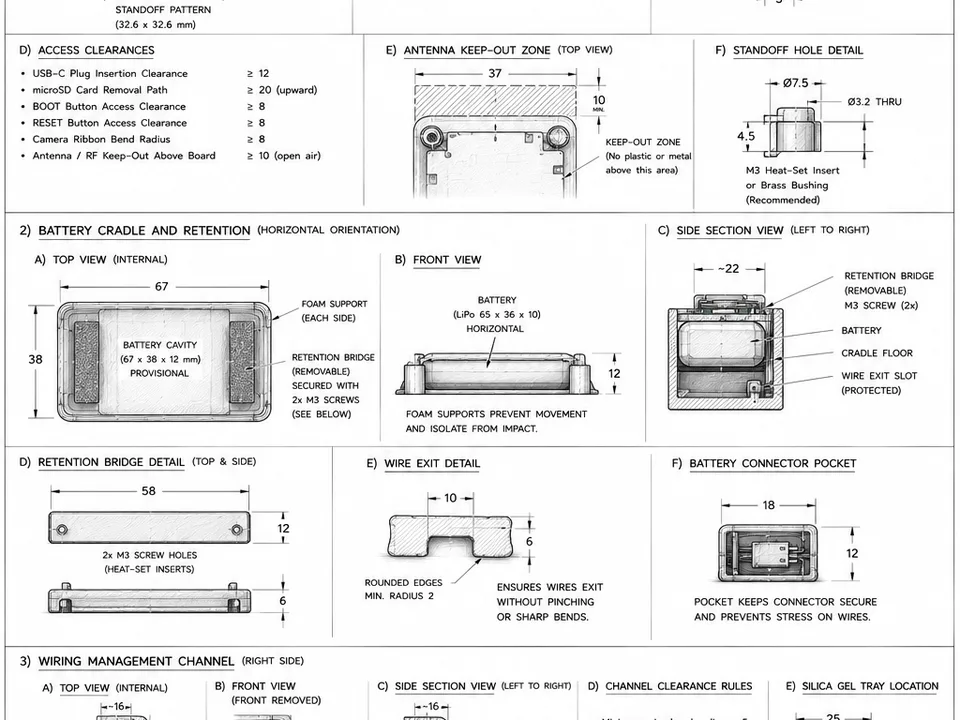
Scout Alpha 1 Mechanical Baseline
Establishing the first reviewed mechanical reference for the Scout Alpha 1 enclosure using the purchased hardware, confirmed measurements, provisional dimensions, and enclosure architecture that will guide future CAD revisions.
Selecting the Scout Hardware
Before designing the enclosure, I needed to choose the hardware that would become the foundation of Scout Alpha 1. Every component was selected to support the project’s goals of affordability, low power consumption, serviceability, and long-term scalability rather than simply choosing the highest-performing parts available.
Designing a Modular Wildlife Platform
As the project evolved beyond a single wildlife camera, it became clear that combining sensing, observation, processing, and long-term data management into one device created unnecessary compromises. This article introduces the modular architecture behind the platform and explains the roles of Scout, Ranger, and AI Hub within the larger ecosystem.
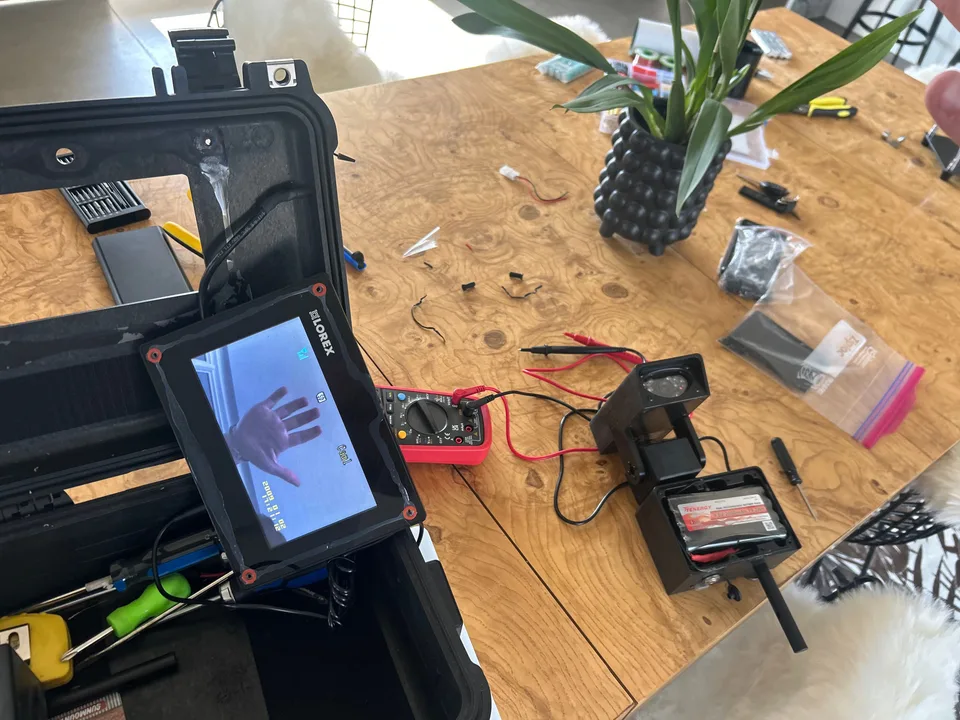
Why I Started Building My Own Wildlife Cameras
Why I wanted to build my own wildlife camera system and what I wanted to do differently.
Gallery
WLD-05 — Wildlife Detection V2 UI Preview
Gallery imagePrototype UI preview reconstructed from the working Wildlife Detection V2 interface. A direct software capture will replace it during a future development pass.
WLD-02 — Product Family Overview
Concept design Interface conceptConcept overview of the Scout, Ranger, and AI Hub device families and their planned roles within the platform.
Engineering record timeline
Designing a Modular Wildlife Platform
As the project evolved beyond a single wildlife camera, it became clear that combining sensing, observation, processing, and long-term data management into one device created unnecessary compromises. This article introduces the modular architecture behind the platform and explains the roles of Scout, Ranger, and AI Hub within the larger ecosystem.
Why I Started Building My Own Wildlife Cameras
Why I wanted to build my own wildlife camera system and what I wanted to do differently.